In 1995, four years after India began its economic reforms, I returned to the country to pursue a lifelong goal: alleviating poverty and advancing social justice.
At the end of the day in Bangalore, I often found my hair coated with a greasy residue. My eyes watered, and breathing sometimes felt labored. Traffic-related pollution appeared to be a major contributor, although those symptoms could not be tied to a particular pollutant. Most vehicles in India lacked catalytic converters and ran on leaded petrol, polluting the air with their exhaust and coating roadside trees with dust-like particles.
Having lived in the United States when unleaded petrol was introduced there, I knew that lead exposure was dangerous, especially for young children. Yet, my early conversations with the Karnataka State Pollution Control Board suggested that there was little awareness in India of the scale of lead poisoning.
When I returned to the United States a month later, I met experts at the Centers for Disease Control and Prevention, the World Health Organization, the World Bank, and the US Environmental Protection Agency. They supported my proposal to conduct a national study of blood lead levels among children and workers in high-risk industries across major Indian cities.
I purchased blood lead analyzers from ESA, Inc., and received training from the CDC. I then approached India's ambassador in Washington, hoping to obtain permission to import the equipment without paying customs duty.
"What is this lead thing?" he asked, as I recall. He said India had more urgent problems, including unsafe drinking water and inadequate waste disposal. “Why not work with the government on those instead?”
He was right about how serious those problems were. But I remained deeply concerned about lead's effect on children's development.

From concern to evidence
Back in India, I assembled a team at the George Foundation led by Admiral Stanley Dawson and Dr. T. Venkatesh, then head of the Department of Biochemistry at St. John's Medical College. We arranged blood lead testing through 12 hospitals in Bangalore, Calcutta, Mumbai, Chennai, Hyderabad, Vellore, and Delhi. We contacted senior government officials and the oil companies that supplied petrol across India.
The study focused mostly on children, but we also tested traffic policemen at congested junctions, factory employees exposed to lead, and rural women who broke open discarded batteries to remove their lead plates.
The results from 22,000 samples were alarming. 51.4 percent of samples from children showed blood lead levels above 10 micrograms per decilitre, the reference level at the time. Because participants came through hospitals and targeted screening programs rather than a representative national sample, the results couldn’t be applied precisely to all Indian urban children. However, the findings indicated that a large number of children faced a serious risk to their health and intellectual development.
To discuss the evidence and possible solutions, the George Foundation organized a three-day international conference in Bangalore, attended by 450 delegates from 20 countries. On its final day, the managing directors of Bharat Petroleum, Indian Oil, and Hindustan Petroleum made an unexpected announcement: their companies would remove lead from petrol within 15 months—a decision the conference likely accelerated. The room erupted in celebration.
The World Bank circulated the conference proceedings and a White Paper containing our recommendations to developing countries. Representatives of organizations including the World Bank, WHO, US EPA, ICMR, and CDC endorsed the recommendations.
Soon, we established the National Referral Centre for Lead Poisoning in India (NRCLPI) at St. John's Medical College. Its work included raising public awareness, advocating for the removal of lead from paint, encouraging safer industrial practices, and promoting proper disposal of lead-contaminated waste.
India completed its phase-out of leaded petrol by mid-2000 as mandated earlier by the government. Years later, in 2021, the UN Environment Programme (UNEP) announced that the use of leaded petrol had ended worldwide. It estimates that the global phase-out prevents more than 1.2 million premature deaths each year.
What the lead campaign taught me
The campaign taught me that environmental progress becomes possible when four things come together: credible evidence, public awareness, institutional cooperation, and practical alternatives.
Evidence gave the problem legitimacy, and public discussion made it difficult to ignore. Cooperation brought researchers, hospitals, international organizations, government officials, and companies together in a shared effort. Most importantly, unleaded petrol offered a practical alternative to harmful energy use.
That lesson remains relevant today because the environmental challenges we face have grown larger and more interconnected. For instance, according to the World Meteorological Organization (WMO), 2015 to 2025 were 11 of the warmest years in its 176-year observational record. An OECD report dated 22 February 2022 points out that only about 9 percent of the world's 353 million tons of plastic waste in 2019 was ultimately recycled.
The human consequences are already visible. According to 2025 Lancet Countdown reports, heat exposure in India cost an estimated 247 billion potential working hours in 2024, with agriculture accounting for about two-thirds of that loss. Land degradation, drought, floods, and extreme heat are weakening food systems and threatening livelihoods worldwide.
These figures are not abstract. They represent cities that are turning unlivable because of heat, food scarcity, and unsafe air.

Responsibility must be shared
Governments have the greatest power to establish standards, enforce environmental laws, and make cleaner choices affordable. They should strengthen public transport, reduce vehicle emissions, improve waste segregation and processing, discourage unnecessary single-use plastics, protect and expand green spaces, and support renewable energy.
Businesses must also take responsibility for the environmental impacts of their products. They should reduce excessive packaging, recover and recycle materials where possible, improve industrial waste management, and invest in cleaner production.
Individuals have a role as well. Households can separate waste, avoid unnecessary disposable products, conserve electricity and water, and adopt solar energy where it is technically and financially feasible.
These measures cannot be imposed uniformly on every household. Lower-income families need subsidies, affordable financing, reliable public services, and reasonable exemptions. Environmental policy succeeds when it makes responsible choices practical, not when it places an unfair burden on those with the fewest resources.
Practicing sustainability at Shanti Bhavan
At Shanti Bhavan, we have tried to put these principles into practice on a modest scale. When we began construction of our first campus in 1995, we decided to meet its electricity needs through solar power. TATA BP was among the few solar equipment suppliers available at the time for our lighting, kitchen equipment, and well pumps. We followed the same approach when we opened the second campus in 2022, which now operates entirely on solar electricity.
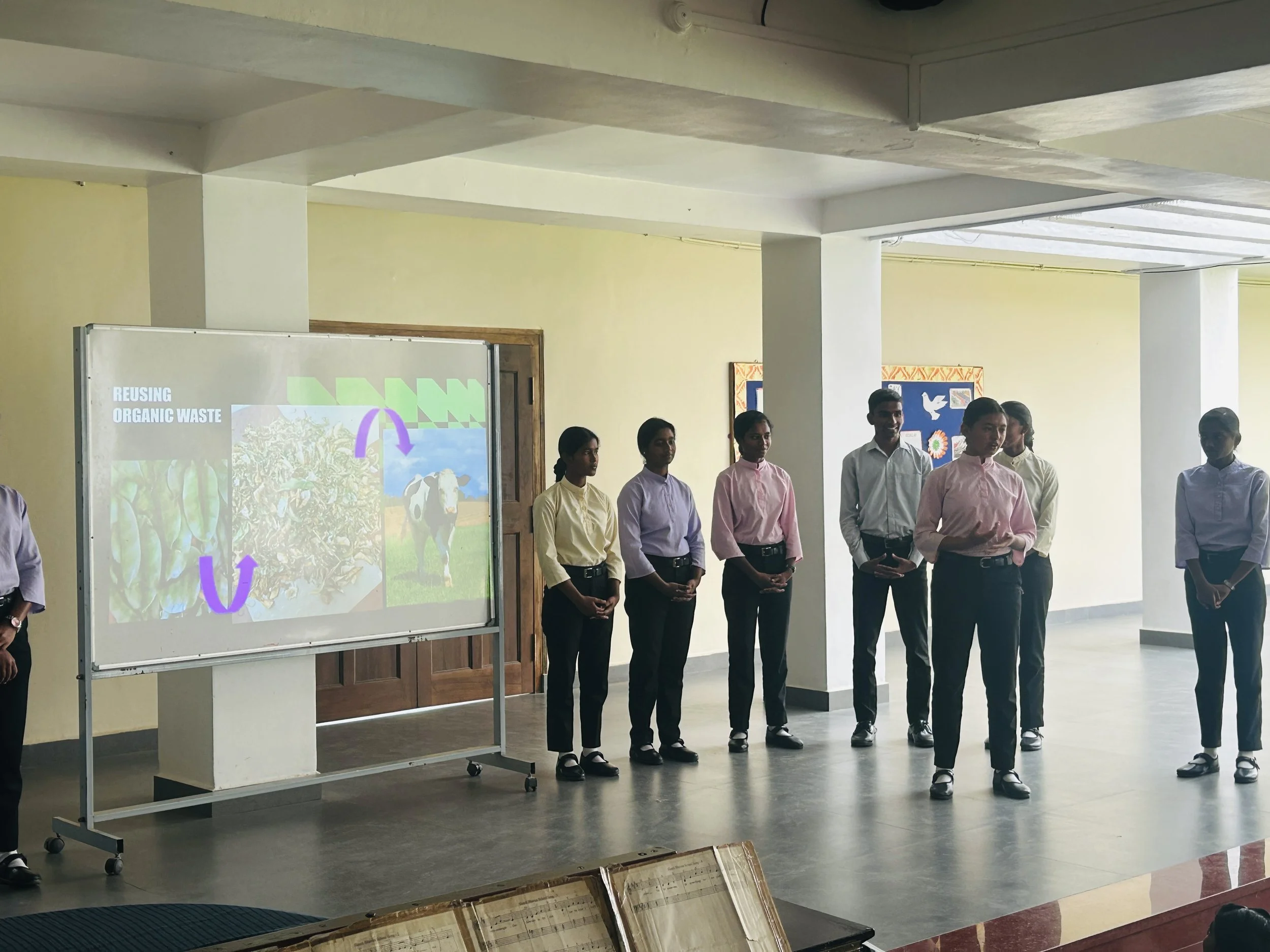
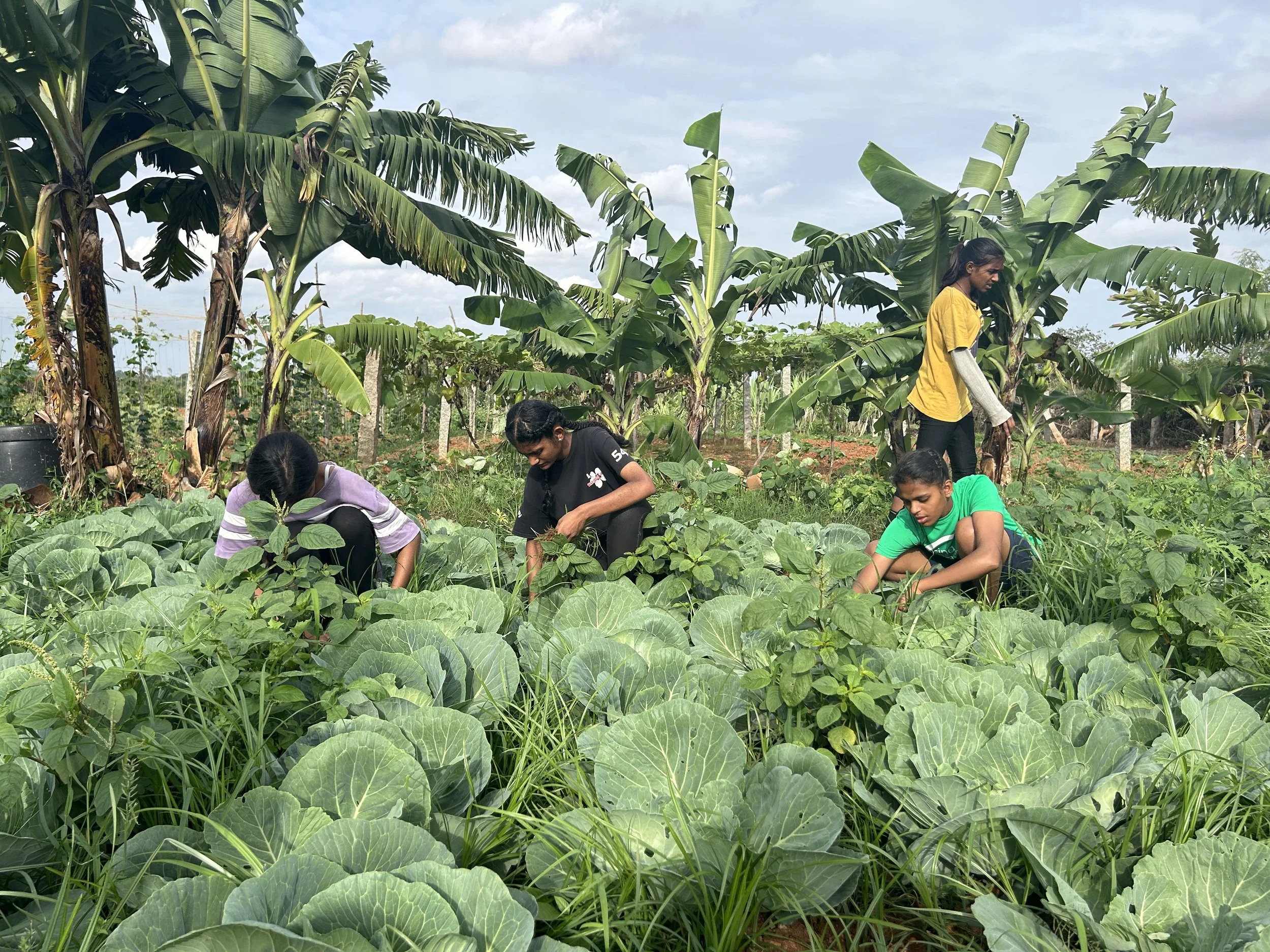
We also manage waste at its source. Plastic materials and bottles are sent to the local municipal authorities for recycling, and single-use plastic packaging is not permitted on campus. Wastewater is treated and reused for trees. Our two farms, covering more than 10 acres, apply natural fertilizers, such as cow dung and compost. We also prepare plant-based pesticides made with materials such as neem seeds and pongamia.
These are small steps compared with the scale of the world's environmental concerns. But they matter because our children experience sustainability as part of daily life, not merely learn about it in a classroom.

The lesson we should carry forward
Environmental protection cannot be left to governments alone. Governments must lead, but businesses, institutions, and individuals must also act.
The lead campaign showed me that major change can begin with a problem that many people might not have recognized yet. Today's environmental challenges are larger than the lead problem we confronted three decades ago. But the approach to a solution remains the same: measure the harm, make it visible, bring the right institutions together, and offer practical ways to change.