Striving for a Great Society
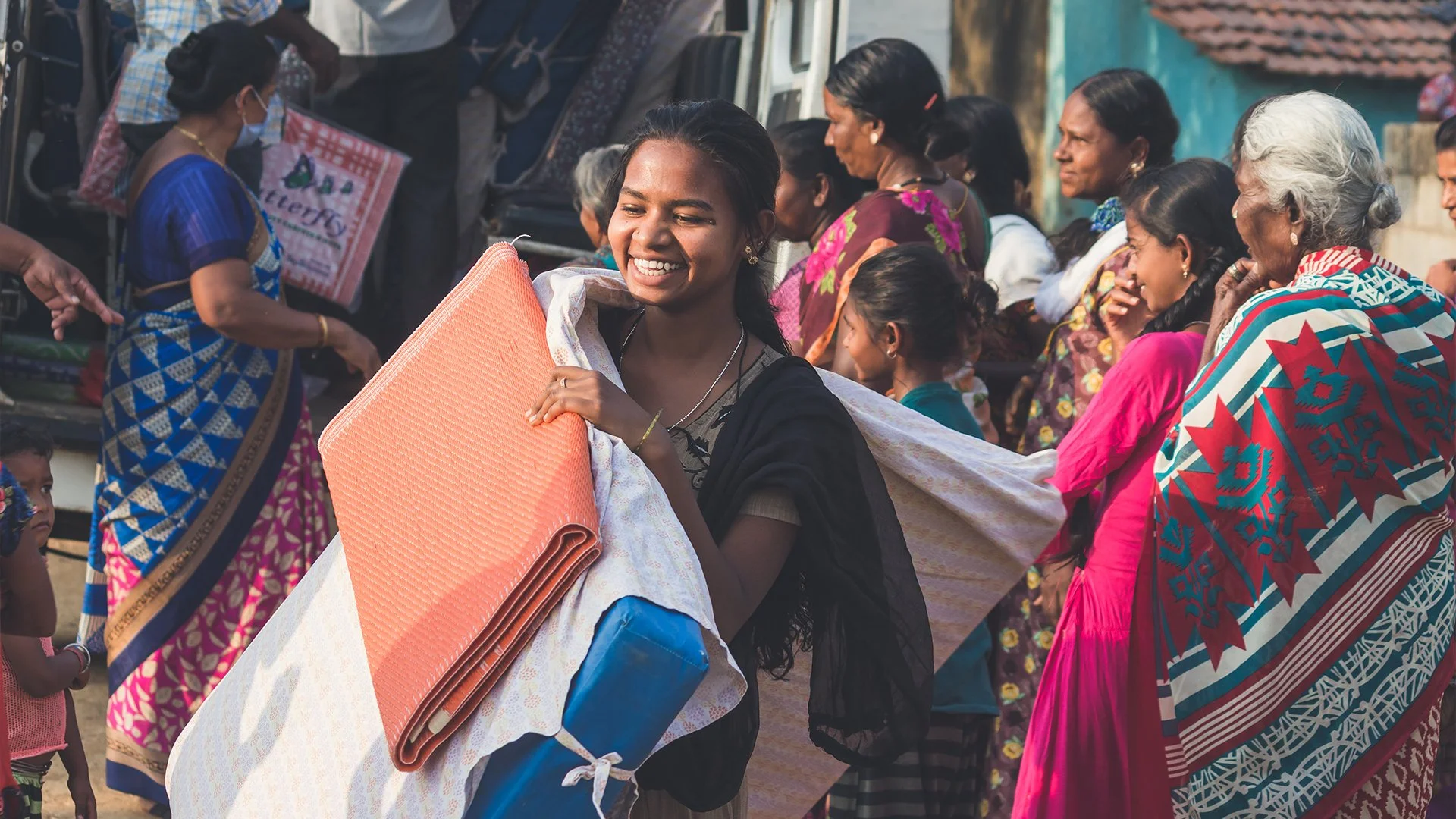
The idea of a Great Society has always appealed to me. It doesn’t suggest a country or a society free from all problems, but one that challenges us to think collectively about our responsibilities toward one another and act upon them. As US President Lyndon Johnson had asked America in 1964, it is a call to action for social justice and to end poverty. He urged Americans to use their nation's wealth and power to build a society that guarantees liberty and opportunity for every citizen.
Every society faces significant challenges. Poverty diminishes the lives of millions. Illness places enormous burdens on individuals and families. Indignity, discrimination, and lack of opportunity hinder people’s ability to improve their condition. The question is not whether these problems still exist, but how we choose to respond to them.
Governments undoubtedly have an important role to play in addressing social and economic challenges. Public policy and developmental programs can improve lives and expand opportunities, but governments alone cannot create the kind of nation we aspire to build. A compassionate society recognizes its responsibility towards all and acts fairly.
One of the redeeming features of a country is its general concern about the agency of ordinary people and the idea that citizens can contribute to the betterment of their communities. It is about their capacity to make decisions, effect societal change, and shape their destiny. This belief is reflected in values such as democracy, social justice, inclusiveness, opportunity, and environmental stewardship. These principles encourage people to look beyond themselves and strive for the common good.
A fair society emerges when citizens participate in causes larger than their self-interest. They are prepared to share their time, talent, and resources for those left behind. The ideal of a Great Society inspires everyone, especially the wealthy, to find ways to reduce suffering and bring comfort to those who are left behind.
At the heart of this idea lies a simple but important proposition: service is a moral duty. Too often, it is viewed as an optional act of generosity, something admirable but not essential. Societal transformation occurs when there is recognition of our shared humanity and responsibility toward those who face challenges they cannot overcome on their own. It reflects the understanding that our lives are interconnected and that our collective well-being depends upon the willingness to support one another.
The need for such a commitment is evident all around us. We see it in communities struggling with economic decline. We see it in families burdened by illness. We see it in individuals who face discrimination, exclusion, or the absence of financial progress in their lives. We see it in children who lack access to quality education. These and other challenges are not abstract social problems; they affect real people whose lives could be transformed through access to opportunity and constant support.
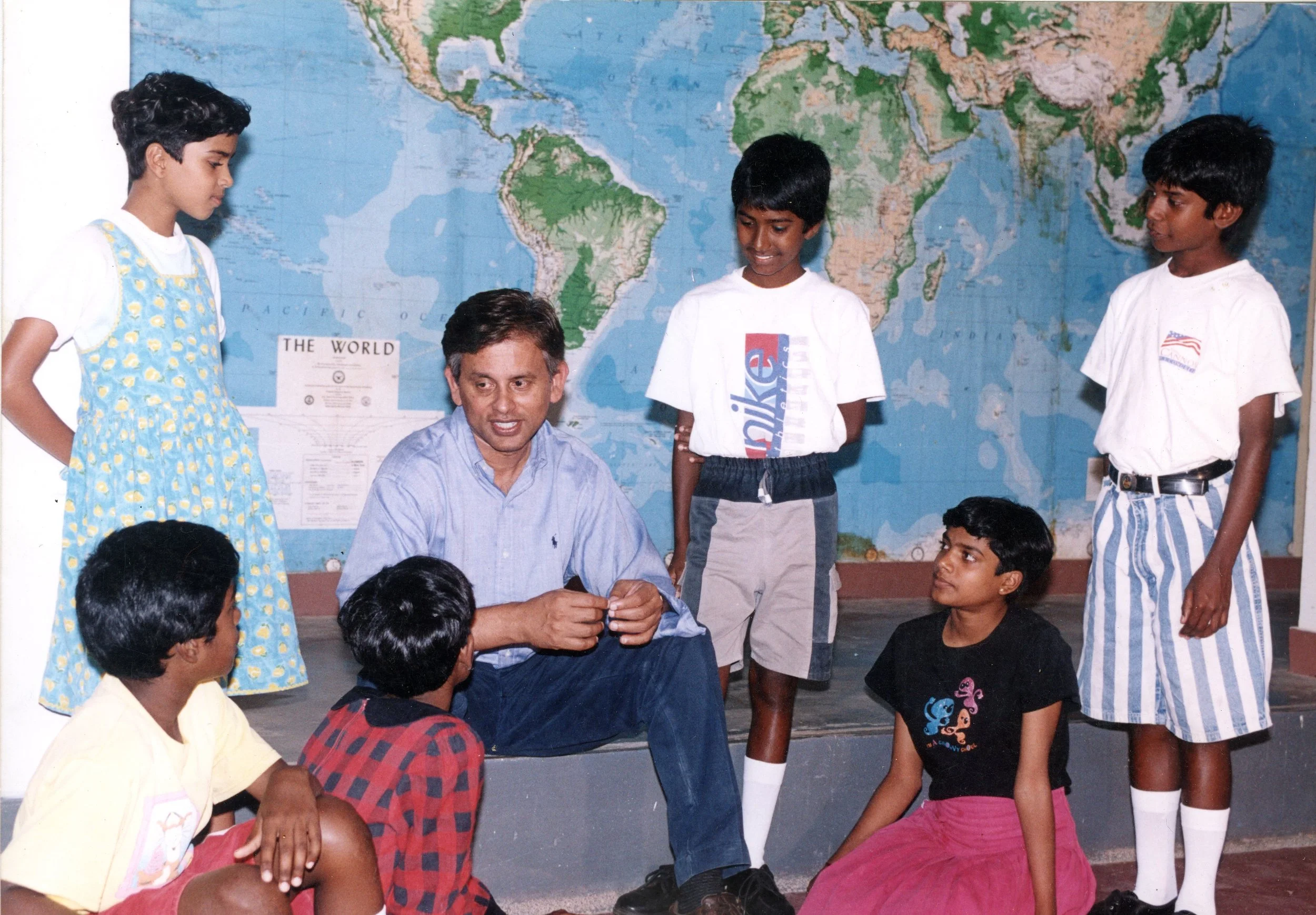
I have been particularly interested in the role of education in creating opportunity, economic well-being, and equality. My own understanding of these issues broadened after returning to India more than thirty years ago.
I was deeply disturbed by what I had witnessed: the social and economic inequalities experienced by many underprivileged families and communities. Even today, I see suffering and a lack of self-worth on the faces of parents who bring their young children for admission to Shanti Bhavan, the school I founded over thirty years ago to benefit economically deprived families. I notice the same among the children of Baliganapalli, the village closest to our school, whose learning is robbed by hunger and malnutrition.
In contrast, education has transformed everything for the children in our school. Parents who once struggled with self-confidence now stand with pride at graduation ceremonies, watching their children advance to college with high aspirations. It is heart-warming to hear from many that their children are the first in their families to study beyond primary school.
Several children who entered our school not having learned English subsequently graduated from some of the world's finest universities. I still remember a father who worked as a daily-wage laborer telling me excitedly, "I never imagined that anyone from our family would be studying in America." His words captured something more profound than personal success. They reflected the breaking of social barriers that had existed for his family for generations.
Over the years, the children at our school have had remarkable accomplishments. Daughters and sons of agricultural laborers have become medical professionals, engineers, teachers, and business managers. Their families’ circumstances have been profoundly transformed through their children’s achievements, made possible by an exceptional education that equips them for promising careers.
Early in my journey, I envisioned creating one hundred high-quality schools for children from disadvantaged backgrounds. Even the limited success achieved so far called for a substantial undertaking beyond my individual contribution. Significant financial support and the involvement of many organizations have made my work possible.
I have come to appreciate both the possibilities and the limitations of social change. Societies built on classes and social status do not quickly alter their systems. I also understood from early on that the required evolution towards equity seldom occurs by persuasion or moral arguments. Instead, change must occur from within, from the bottom up; its catalyst being the success of those who are socially disadvantaged. The path to social justice for them is invariably through economic opportunity.
Governments can provide a foundation for change. Institutions can offer opportunities. But lasting change affecting the larger society cannot be accomplished by public projects, or a small number of organizations and philanthropists acting alone. Ultimately, a Great Society depends on the willingness of its people to participate in building it.

Progress demands the collective power of people with financial means investing in social causes. Every person has something to contribute, and when we all offer what we can, the combined impact becomes transformative.
Not everyone serves in the same way. Some contribute through philanthropy. Others volunteer their time. Some mentor young people, support educational initiatives, strengthen community institutions, advocate for important causes, or use their professional expertise to solve problems. The forms of service may differ, but the underlying principle remains the same: each person can make a worthwhile contribution consistent with their life’s purpose. I have been encouraged by individuals of modest means who dedicate themselves to social causes, and by several wealthy individuals who aspire to transformative changes from addressing formidable human problems.
In an increasingly interconnected world, our responsibilities extend beyond our immediate communities. The challenges facing humanity—poverty, access to education, public health, environmental sustainability, and human dignity—are shared concerns that require us to think beyond ourselves, recognize our obligations to the larger society, and cultivate a sense of duty and global connectedness. The spirit of honest confrontation of major issues and cooperation among people of different backgrounds demands both dialogue and action.
A meaningful life is measured not just by what we achieve for ourselves, but also by how much others benefit through us. A society becomes stronger when its people embrace this understanding. A higher purpose in life is to improve society and expand opportunities for others as well. Hence, I have come to view service without boundaries as the highest expression of life’s mission.
But I also recognize that most people are too burdened by their day-to-day difficulties to consider helping others. Personal security and financial success are their main concern. Those goals are important but not limiting. Even those with limited means can help others with small monthly contributions and volunteering their time. Financially successful individuals have a higher responsibility to assist in bigger ways. The obligation to serve can go hand in hand with their professional advancement. Compassion is just as important as prosperity.
The future will be shaped not only by what we accomplish for ourselves but by what we do for others. Service, therefore, is more than an act of benevolence. It is a responsibility and a commitment to the common good. And it remains one of the most purposeful ways individuals can live and contribute to a better world.
The true measure of a society is not in its wealth, but in the opportunities it provides and the dignity it upholds for all its people.