Who Is Abraham George? Founder of Shanti Bhavan and Philanthropist

Abraham George is an Indian American philanthropist, entrepreneur, and the founder of Shanti Bhavan, a pioneering residential school in India dedicated to breaking the cycle of poverty through long-term education. Known for his unique approach to social impact, Abraham George built his career in finance before dedicating his life to creating opportunities for children from the most disadvantaged backgrounds. His work spans education, public health, and economic development, making him one of the most influential social entrepreneurs focused on systemic change.

Who Is Abraham George?

Abraham George is a philanthropist and social entrepreneur best known as the founder of Shanti Bhavan, a nonprofit residential school in India that provides free, high-quality education to children from impoverished families from early childhood through college. Unlike traditional charitable models, Abraham George focuses on long-term investment in individuals, helping students build sustainable careers and lift their families out of poverty.

Often referred to as Dr. Abraham M. George, he combines a background in international finance with a mission-driven approach to solving complex social issues. His work is centered around the belief that education is the most effective path to economic opportunity and long-term societal change.

Dr. George’s Life Story in Pictures

Early Life and Background

Abraham George was born in Kerala, India, where he spent his early years before beginning a path that would eventually lead him to international business success and large-scale philanthropic work. Growing up in India exposed him to the realities of economic inequality at a young age, an experience that would later shape his long-term mission to create opportunities for underserved communities.

Before entering the business world, Abraham George served as an officer in the Indian Army, achieving the rank of Captain. His time in the military played a key role in developing the discipline, leadership, and strategic thinking that would later define both his corporate career and his approach to philanthropy. It also deepened his understanding of the structural challenges faced by individuals in disadvantaged environments, reinforcing his belief that meaningful change requires long-term, systemic solutions.

Business Career and Financial Success

Before becoming known for his philanthropic work, Abraham George built a successful career in finance and technology, specializing in international markets and financial risk analysis. After completing his education at New York University, he began his career in the United States, working in the international division of a major financial institution, where he focused on global currency and economic systems.

He later founded Multinational Computer Models, Inc., a financial software company that provided advanced tools for managing foreign exchange risk and analyzing global financial exposure. Under his leadership, the company grew to serve major corporations and financial institutions, establishing a strong presence in the United States and internationally.

Abraham George’s work in financial modeling and risk management positioned him as a respected figure in the industry, leading to opportunities to collaborate with leading investment banks and global organizations. His company was eventually acquired by SunGard Data Systems, a major financial technology firm, marking a significant milestone in his business career.

This period of success provided both the financial resources and the strategic foundation that would later support his transition into philanthropy. His experience building and scaling a company continues to influence his approach to social impact, where long-term planning, operational discipline, and measurable results remain central to his work.

Transition to Philanthropy

After building a successful career in finance, Abraham George made a deliberate decision to shift his focus toward addressing long-standing social challenges in India. In the mid-1990s, he returned to India after more than two decades in the United States, with the goal of applying his experience, resources, and long-term thinking to issues related to poverty and inequality.

In 1995, he founded The George Foundation, a nonprofit organization focused on improving the lives of underserved communities through education, healthcare, and economic development initiatives. Rather than pursuing short-term charitable efforts, Abraham George focused on building structured programs designed to create lasting, measurable impact over time.

This transition marked a defining shift in his career. Drawing from his background in finance and business, he approached philanthropy with an emphasis on accountability, sustainability, and long-term outcomes. His work during this period laid the foundation for the creation of Shanti Bhavan, which would become the central focus of his efforts to break the cycle of generational poverty through education.

Shanti Bhavan and Its Mission

Abraham George is best known as the founder of Shanti Bhavan, a nonprofit residential school in India designed to break the cycle of poverty through long-term, high-quality education. Established in 1997, Shanti Bhavan was built on the belief that meaningful, lasting change requires a sustained investment in individuals from an early age through adulthood.

Shanti Bhavan provides full scholarships to children from some of the most economically disadvantaged backgrounds, supporting them from approximately age four through college and early career development. The program includes not only academic education, but also housing, nutrition, healthcare, and mentorship, creating a structured environment where students can focus on long-term success.

Unlike traditional educational or charitable models that focus on short-term support, Abraham George designed Shanti Bhavan as a multi-year commitment, often spanning more than a decade for each student. This approach allows students to build a strong academic foundation, develop critical life skills, and transition into professional careers with the support needed to achieve long-term stability.

The mission of Shanti Bhavan extends beyond individual success. The program emphasizes the importance of graduates giving back to their families and communities, creating a ripple effect that expands the impact of each student’s education. This model reflects Abraham George’s broader philosophy that sustainable change comes from empowering individuals to create opportunities not only for themselves, but for others as well.

Over time, Shanti Bhavan has gained international recognition for its innovative approach to education and social impact. It has been featured in global media, including the Netflix documentary series Daughters of Destiny, which brought wider attention to the lives of students and the long-term outcomes of the program.

Impact and Results

The long-term model developed by Abraham George through Shanti Bhavan has produced measurable outcomes that reflect the effectiveness of sustained investment in education. Students who enter the program at a young age are supported through their academic journey, resulting in consistently high graduation and college completion rates compared to national averages for underserved communities.

A significant percentage of Shanti Bhavan students go on to attend universities and pursue professional careers in fields such as technology, business, and healthcare. Many graduates secure positions with established companies or continue their education through advanced degree programs, creating opportunities that extend well beyond their original circumstances.

One of the defining aspects of the program is its emphasis on long-term impact beyond the individual student. Graduates are encouraged to support their families and contribute to their communities, often helping to improve financial stability, access to education, and overall quality of life for those around them. This approach reinforces Abraham George’s focus on creating generational change rather than short-term results.

The success of Shanti Bhavan’s model has also led to continued growth and expansion, including the development of additional programs and new campuses aimed at reaching more students over time. These efforts reflect a commitment to scaling impact while maintaining the structure and quality that define the organization’s approach.

Other Initiatives and Contributions

In addition to founding Shanti Bhavan, Abraham George has been involved in a range of initiatives focused on public health, education, and community development. Through The George Foundation, he has supported programs designed to address systemic challenges affecting underserved populations in India.

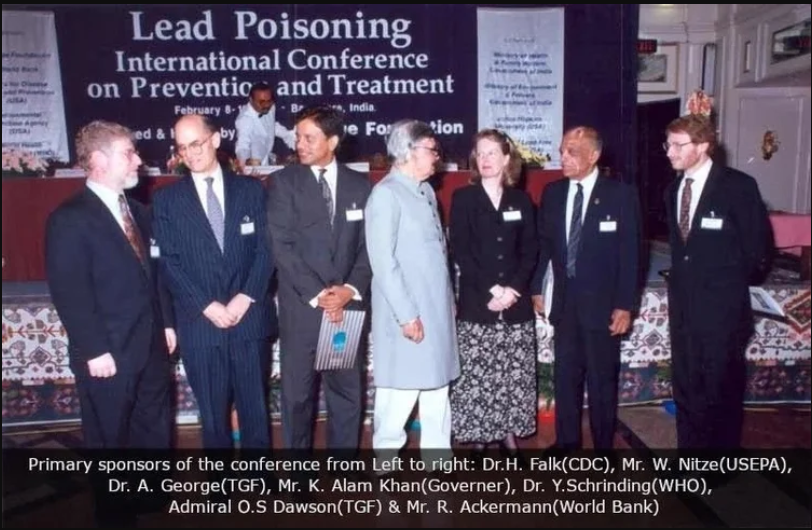
One of his most notable contributions outside of education is his work in raising awareness around lead poisoning in India. Through large-scale testing and research initiatives, The George Foundation helped highlight the widespread impact of lead exposure on children’s health and development. These efforts contributed to broader public health discussions and policy changes aimed at reducing lead exposure, including the transition away from leaded gasoline.

Abraham George has also supported the development of healthcare services for rural communities, helping to establish programs that improve access to basic medical care. These initiatives focus on providing consistent, reliable support rather than temporary solutions, aligning with his long-term approach to social impact.

In the field of education beyond Shanti Bhavan, he has contributed to the creation of institutions focused on journalism and media, supporting efforts to promote transparency, accountability, and access to accurate information. These projects reflect a broader commitment to strengthening systems that influence both economic opportunity and social progress.

Across these initiatives, Abraham George’s work is defined by a consistent approach: identifying structural problems, building long-term solutions, and focusing on measurable outcomes that create lasting change.

Media, Recognition, and Public Appearances

Abraham George’s work has received international attention through media coverage, academic recognition, and public appearances. His efforts with Shanti Bhavan gained global visibility through the Netflix documentary series Daughters of Destiny, which followed the lives of several students over an extended period and highlighted the long-term impact of the program.

In addition to documentary coverage, Abraham George has been featured in publications, university profiles, and discussions focused on social entrepreneurship and education. His work has been recognized by academic institutions such as New York University, where his contributions to both business and philanthropy have been acknowledged.

He has also appeared in interviews, podcasts, and television segments, including appearances on programs such as The Kelly Clarkson Show, where he has discussed his mission, the development of Shanti Bhavan, and the broader importance of long-term investment in education. These appearances have helped bring wider attention to his work and the impact of the students and communities connected to the program.

Through media exposure and public recognition, Abraham George has been able to expand awareness of his approach to social impact while maintaining a focus on the core mission of creating sustainable opportunities through education.

Books and Thought Leadership

In addition to his work in business and philanthropy, Abraham George has contributed to academic and public discussions through his writing and thought leadership. He has authored books on international finance as well as works focused on social impact, education, and purpose-driven leadership.

His writing reflects the same structured, long-term perspective that defines his career. Drawing from both his experience in global finance and his work with underserved communities, Abraham George focuses on practical approaches to creating sustainable change rather than short-term solutions. His insights often center on the role of education in expanding economic opportunity and the importance of disciplined execution in both business and philanthropy.

His memoir, Mountains to Cross, provides a detailed account of his journey from India to the United States, his success in the financial sector, and his decision to dedicate his life to social impact. The book offers a closer look at the development of Shanti Bhavan and the principles that guide his work, while also exploring broader themes related to purpose, responsibility, and long-term commitment.

Philosophy and Approach

Abraham George’s work is guided by a clear and consistent philosophy: long-term change is best achieved through access to high-quality education and economic opportunity. Rather than focusing on short-term relief, his approach centers on building systems that allow individuals to develop the skills, confidence, and stability needed to create lasting success.

A key principle behind his work is the belief that meaningful impact requires sustained commitment. Through initiatives like Shanti Bhavan, Abraham George has demonstrated that supporting individuals over extended periods of time can lead to significantly better outcomes than traditional models that provide limited or temporary assistance. This long-term perspective is reflected in the structure of his programs, which are designed to guide students from early childhood through higher education and into professional careers.

His background in finance also plays a central role in how he approaches philanthropy. Abraham George emphasizes accountability, measurable results, and efficient use of resources, applying many of the same principles used in business to the design and execution of social programs. This combination of mission-driven work and disciplined strategy has allowed him to build initiatives that are both impactful and sustainable.

At its core, his philosophy is focused on empowerment. By providing individuals with the tools and opportunities to succeed, Abraham George’s work aims to create long-term, self-sustaining change that extends beyond any single program or organization.

Not to Be Confused With Other Individuals Named Abraham George

There are multiple individuals with the name Abraham George, which can sometimes lead to confusion in search results. This page specifically refers to Abraham M. George, the philanthropist, entrepreneur, and founder of Shanti Bhavan, known for his work in education and long-term social impact.

In some cases, the name Abraham George may also refer to other public figures, including individuals involved in politics or regional leadership roles. For example, Abraham George is a separate individual known for his involvement in public office. While they share the same name, they are not connected in terms of career, background, or area of work.

Abraham M. George is most closely associated with philanthropy, education, and nonprofit leadership, particularly through his work with Shanti Bhavan and The George Foundation. His contributions are centered on creating long-term opportunities through education and community development, distinguishing him clearly from others who share the same name.

Frequently Asked Questions About Abraham George

Who is Abraham George?

Abraham George is an Indian American philanthropist, entrepreneur, and the founder of Shanti Bhavan, a nonprofit residential school in India that provides long-term education to children from disadvantaged backgrounds. He is known for his structured approach to social impact, focusing on creating lasting economic opportunities through education.

What is Abraham George known for?

Abraham George is best known for founding Shanti Bhavan, an educational institution designed to break the cycle of poverty by supporting students from early childhood through college and into their careers. His work emphasizes long-term investment in individuals rather than short-term charitable solutions.

What is Shanti Bhavan?

Shanti Bhavan is a nonprofit residential school in India founded by Abraham George in 1997. It provides full scholarships, housing, and support to children from underserved communities, guiding them through their education and into professional careers with a focus on long-term success.

Where is Abraham George from?

Abraham George was born in Kerala, India, and later moved to the United States for higher education and his professional career. He eventually returned to India to focus on philanthropic work and social impact initiatives.

What did Abraham George do before philanthropy?

Before transitioning into philanthropy, Abraham George built a successful career in finance and technology. He founded a financial software company focused on global risk management, which was later acquired by a major financial technology firm.

What is Abraham George’s approach to philanthropy?

Abraham George’s approach to philanthropy focuses on long-term, structured solutions that create lasting change. His work emphasizes education, accountability, and measurable outcomes, with the goal of helping individuals achieve sustainable economic independence.

Conclusion

Abraham George is a philanthropist, entrepreneur, and the founder of Shanti Bhavan, recognized for his long-term approach to addressing poverty through education. With a background in international finance and a commitment to building sustainable solutions, he has developed a model that focuses on creating real, lasting opportunities for individuals and their communities.

Through his work with Shanti Bhavan and The George Foundation, Abraham George continues to demonstrate how structured, long-term investment in education can lead to meaningful change. His approach remains centered on accountability, measurable outcomes, and the belief that access to opportunity is one of the most effective ways to drive long-term social progress.